
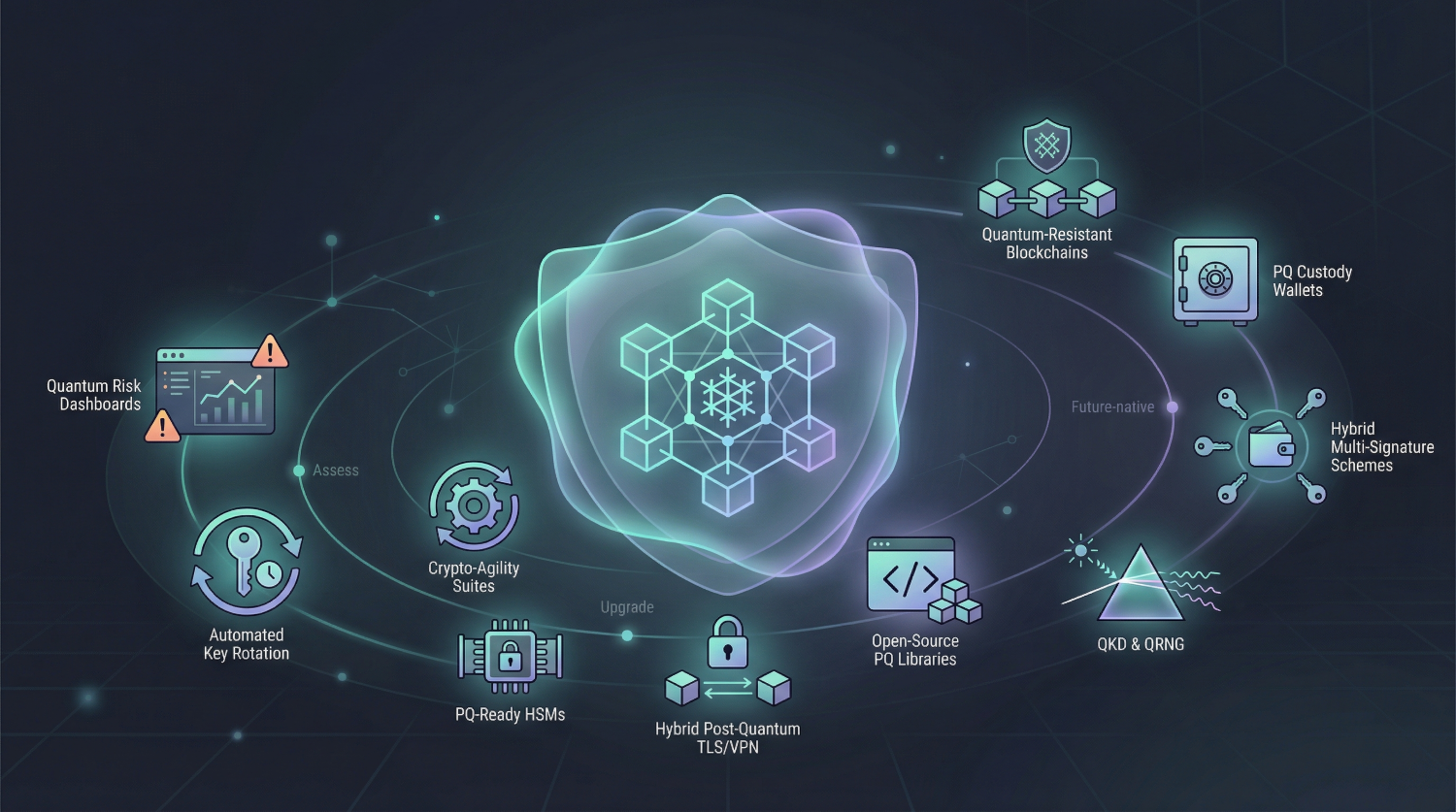
Understanding Qubit-Based Attacks and Their Impact
Quantum computing is transforming the cybersecurity landscape. Qubit-based attacks harness the unique properties of quantum computers, using superposition and entanglement to process information in ways classical computers cannot. This allows certain mathematical problems, such as factoring large numbers or computing discrete logarithms, to be solved much faster, posing a significant threat to current encryption systems.
The impact of these attacks is profound. Algorithms that underpin secure communications, including those used in banking, email, and government, could be broken almost instantly once quantum computers become powerful enough. As the field advances, even systems considered robust today may be at risk. Organizations must recognize the urgency and begin evaluating their encryption stacks to protect sensitive data from future threats.
Assessing Quantum Readiness: Key Steps
The first step in preparing for the quantum era is identifying which cryptographic algorithms are most vulnerable. While symmetric encryption like AES is less susceptible, it may still require longer key lengths to maintain adequate security margins. Asymmetric encryption methods such as RSA and ECC are far more at risk due to Shor’s algorithm, which can break them by efficiently factoring large numbers.
For a deeper understanding of this topic, review evaluating Quantum Computing Security resilience. The Linux Foundation launched the Post-Quantum Cryptography Alliance to drive the industry-wide adoption of quantum-safe cryptography, bringing together AWS, Google, IBM, NVIDIA, and others to produce high-assurance software implementations of the NIST-standardized post-quantum algorithms.
The U.S. Department of Homeland Security also advises organizations to begin inventorying their cryptographic assets and developing action plans for transitioning to quantum-resistant solutions. Beginning this inventory now, before quantum hardware reaches practical scale, is the most effective way to manage the transition.
Common Encryption Algorithms at Risk
Many commonly used encryption algorithms are vulnerable to serious quantum attacks. RSA depends on the difficulty of factoring large prime numbers; with quantum computers, Shor’s algorithm reduces this to a matter of seconds. Similarly, elliptic curve cryptography relies on the difficulty of the discrete logarithm problem, which quantum advances also threaten. Other algorithms, such as DSA and Diffie-Hellman, fall into the same high-risk category. Their work, described in the announcement of the post-quantum cryptography industry alliance, provides a practical foundation for organizations beginning their migration journey.
Symmetric algorithms like AES are more resistant, but they may still be affected if quantum computers reach sufficient scale. Experts recommend doubling key lengths for symmetric algorithms as a precaution. Even hash functions are impacted by Grover’s algorithm, which halves their effective security, meaning SHA-256 would offer only 128 bits of quantum security. Organizations should factor these reductions into their risk models.
Post-Quantum Cryptography: The Future of Secure Communication
Post-quantum cryptography is dedicated to developing algorithms that remain secure against quantum attacks. These algorithms are based on mathematical problems believed to be hard even for quantum machines, including lattice-based, hash-based, and code-based approaches. In August 2024, NIST finalised its first three post-quantum cryptographic standards and is actively encouraging organisations to begin deploying them now.
The Open Quantum Safe project, hosted by the Post-Quantum Cryptography Alliance, is one of the world’s leading open-source efforts in this space, providing production-ready libraries and tools to support integration of post-quantum algorithms into existing systems. Organisations seeking open-source implementations to support their migration can find active resources and community collaboration through the open source post-quantum cryptography project.
Building a Resilient Encryption Stack
Building an encryption stack that can withstand quantum attacks requires a comprehensive approach. Begin by cataloging all cryptographic assets, including software, hardware, and protocols. Identify which systems use at-risk algorithms, especially those protecting highly sensitive or regulated data.
Next, prioritize migration. Systems handling confidential information should be the first to transition to quantum-resistant alternatives. Engage IT and security teams in evaluating post-quantum algorithm candidates and ensure they understand the performance and compatibility implications of each. Regularly monitor standards bodies for updates and participate in community testing to gain insights into practical deployment challenges.
Practical Steps for Organizations
A phased approach is best for organizations preparing for quantum threats. Start by assessing where cryptography is used across the network, including endpoints, databases, communication channels, and backups. Document these locations and note the algorithms in use. Engage with technology vendors to understand their quantum-readiness roadmaps and inquire about plans to support post-quantum algorithm integration.
In the interim, consider hybrid solutions that combine classical and quantum-resistant algorithms to provide additional security during the transition period. This approach allows organizations to maintain backward compatibility while layering in new protections. Stay up to date with regulatory guidance and best practices from industry groups, and participate in information-sharing communities to stay ahead of emerging threats.
Continuous Monitoring and Future-Proofing
Quantum computing is advancingrapidly,y, and its impact on cybersecurity will continue to evolve. Continuous monitoring of technological progress is essential. Assign responsibility within your organization for tracking new algorithm developments, hardware breakthroughs, and updates from standards bodies. Update risk assessments regularly and adjust migration plans as new information becomes available.
Future-proofing also means preparing for unexpected developments. Maintaining cryptographic agility – the ability to swap algorithms quickly as standards evolve – is as important as selecting the right algorithms today. Collaboration with peers, industry experts, and academic partners can provide valuable insights and help organizations adapt as the quantum threat matures.
Developing a Quantum-Safe Culture
Beyond technical solutions, building a quantum-safe culture is critical. Communicate the importance of quantum security to all staff, not just IT professionals. Create clear policies for evaluating and adopting new cryptographic technologies, and ensure that procurement teams consider quantum readiness when sourcing new products or services.
Include quantum-specific threats in incident response tabletop exercises and update response plans accordingly. Leadership commitment to quantum readiness signals to customers and partners that the organization takes long-term data security seriously – a meaningful differentiator in sectors where trust is paramount.
Conclusion
Quantum computing poses a real challenge to current encryption systems. By understanding the risks and taking steps to evaluate and upgrade encryption stacks, organizations can protect their data now and in the future. Staying informed and proactive is key to maintaining security in the coming quantum era.
FAQ
Which encryption algorithms are most at risk from quantum computers?
Algorithms like RSA and ECC are highly vulnerable because quantum computers running Shor’s algorithm can solve the underlying mathematical problems in seconds. Symmetric algorithms such as AES are less affected but may require longer key lengths to maintain adequate security.
What is post-quantum cryptography and why is it needed?
Post-quantum cryptography includes algorithms designed to resist attacks from quantum computers. It is needed because widely used asymmetric encryption will be broken by sufficiently powerful quantum machines, and the transition to safer alternatives must begin before that capability exists.
How should organizations approach migration to quantum-resistant algorithms?
Organizations should start with a full inventory of cryptographic assets, prioritize high-risk systems for early migration, engage vendors on their quantum readiness plans, consider hybrid classical and post-quantum solutions during the transition period, and follow updates from NIST and other standards bodies throughout the process.
