
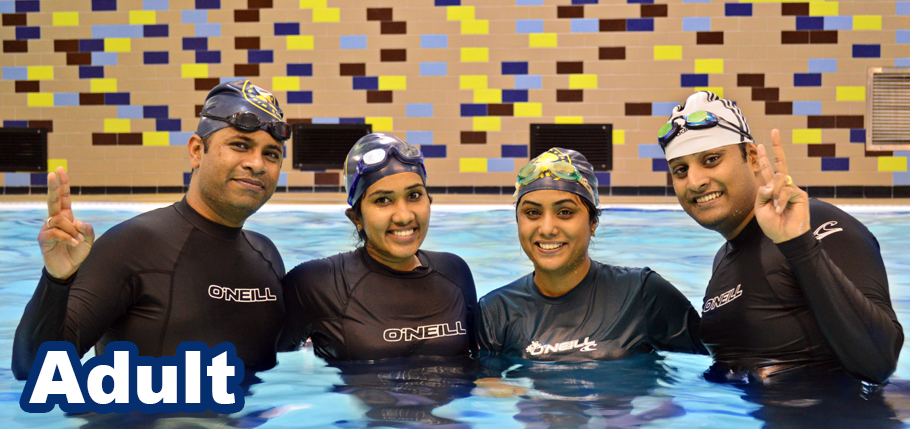
The most common thing adult beginners say in a first lesson is some version of “I know this is embarrassing.” It is not. Nobody on the pool deck is judging you, and plenty of the adults you see swimming laps started exactly where you are. If you are weighing swim lessons for adults, the first hurdle is rarely the water. It is deciding that it is okay to be a beginner.
So is it ever too late? No. But there are real reasons adults wait, and real ways to make starting easier. Here is what tends to hold people back and what actually helps.
Why adults put it off
Most adults who cannot swim well did not choose that. They grew up without access to a pool, had a scary moment in the water, or took a rushed class as a kid that never stuck. Years go by, and the gap starts to feel too big to fix.
Embarrassment keeps it going. Adults hate being bad at things in public, and a pool is about as public as it gets. Add a swimsuit and the idea of someone watching, and it is easy to see why people keep saying next year.
The honest truth is that instructors see nervous adult beginners all the time. Your fear is not unusual, and a good instructor will not make a big deal out of it.
What is pushing more adults to sign up
People start adult swim lessons for a mix of reasons, and the reasons are usually practical. Some have kids and do not want to sit on the sidelines at the pool. Others have a vacation, a boat trip, or a lake house coming up and would rather feel safe than anxious.
Fitness is another one. Swimming is easy on joints, works the whole body, and gives runners and lifters a way to stay active without more pounding. Plenty of adults also want a new skill that is not tied to a screen.
And some just got tired of avoiding it. A friend invites them to a pool party, a coworker mentions a swim, and they realize they have been making excuses for years. That moment is often when they start looking up adult swimming lessons near me.
What adult lessons should actually teach
If you are a true beginner, you do not need strokes yet. You need comfort. Face in the water, feet off the bottom, breathing under control, and the ability to float and recover if something goes wrong.
Gold Medal Swim School’s Adult Swim program is for ages 13 and up and focuses on water survival skills and swimming independence through comfort and swimmer basics. That order is the right one, and it is why many adults who rushed into laps on their own ended up frustrated.
Strokes come after that. Once you are relaxed, freestyle and backstroke start to make sense, because your body is not fighting you. Skipping the basics usually means you hit a wall around the third lap.
When you compare pool schools, look at what they teach first. A program that jumps straight to strokes may look impressive, but a beginner who cannot float comfortably will struggle with everything that follows. Ask to see how the program handles first-time adults.
How to pick a class that fits an adult beginner
Class size is the big one. Gold Medal keeps a maximum of four students per instructor, which means the instructor can actually watch your body position and breathing instead of managing a crowd. For adult beginners, individual attention is the difference between progress and repeating the same mistake.
In-water instructors help too. Hands-on guidance, like someone steadying you while you float or showing where your hips should sit, makes the feel of swimming click faster than watching from the deck.
Ask about pace and about who else is in the class. Some adults are more comfortable with other adults, and a good school will tell you how classes are set up before you commit.
Free trials help a lot here. Gold Medal offers a free trial lesson, and a swim assessment is available so the instructor can place you at the right level. Use the trial to see if you feel comfortable asking basic questions.
A realistic timeline
Expect the first month to feel clumsy. You will tire quickly, swallow water once or twice, and wonder why a kid can do something you cannot. All of that is normal.
Some adults feel comfortable within a couple of months. Others need longer, especially if fear is part of the picture. Be skeptical of any school that promises a set timeline before they have seen you in the water.
Progress is not a straight line. One week you will float perfectly, and the next you will sink and wonder what changed. Usually nothing did. You were just tense or tired.
Small wins count. Putting your face in without flinching, floating for ten seconds, or finishing a width without stopping are all real steps, and they tend to arrive earlier than people expect.
Fitting lessons around real life
Most adults drop lessons because of scheduling, not interest. Work runs late, travel comes up, or someone gets sick. A school with strict policies on missed lessons will lose you fast.
Gold Medal lessons run 30 minutes once a week, and makeup vouchers for adult swim stay valid for up to a year. Enrolled adults can also request an extra class on the same day through the free Unlimited Swim program when there is space.
Short weekly lessons also make it easier to stick with. Thirty minutes fits before work, on a lunch break, or on a weekend morning.
Small things that help early on
Wear a swimsuit you can move in, bring goggles that fit, and arrive a few minutes early so you are not rushing in already stressed. Fitted swimwear creates less drag, and goggles make it easier to relax with your face in the water.
Tell your instructor what you are nervous about. Whether it is deep water, putting your head under, or breathing, it helps them plan. If you are unsure which level you would start in, or what a first class looks like, you can contact us and ask.
Practice a little between lessons. Slow exhales in the shower, bubbles in a sink, and a few minutes of floating on a pool visit keep the skills fresh. Short and regular beats long and rare.
Do not compare yourself to the swimmer in the next lane. They have different years of practice behind them, and what looks easy on the surface usually was not at the start. Measure yourself against last month’s version of you.
Pick one goal that matters to you. It might be swimming across a lake, joining your kids in the pool, or just feeling safe on vacation. A clear reason keeps you coming back on the weeks you would rather skip.
