
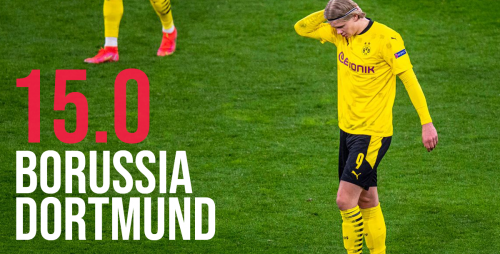
In any fast-moving market, emotional impulses distort decision quality. During the 2021/2022 Bundesliga season—defined by tactical volatility, last-minute turnarounds, and aggressive public sentiment—bettors who operated through discipline rather than emotion consistently outperformed those reacting to narrative pressure. Discipline transforms chaos into structure. It limits exposure to streaks and gives bettors the ability to recognize value rather than chase variance.
Why Emotional Drift Undermines Betting Clarity
Emotion responds to outcome noise, not probability structure. When a bettor reacts to immediate results—whether winning streaks or unlucky losses—risk assessment shifts from calculation to bias. The tendency to “make back” perceived losses accelerates frequency, eroding capital faster than poor model accuracy ever could. In Bundesliga matches, where momentum swings frequently, impulsive betting magnifies these distortions.
Identifying Triggers of Impulsive Betting Behavior
Recognizing emotional triggers helps arrest destructive loops before they compound. Most impulsive moves occur when bettors perceive momentum without confirming statistical backing. Typical triggers include frustration after missed penalties, overconfidence following high-win weekends, and shock reactions to late goals influencing live-odds behavior.
List: Common catalysts behind emotional betting drifts
- Anchoring bias from recent wins or losses
- Fear of missing out during volatile odds movement
- Belief in “due results” after near misses
- Misreading team motivation or injury news emotionally
- Misplaced confidence from partial data or social influence
Each trigger stems from perception rather than rational expectation. The consistent solution is procedural discipline: rules that force delay between observation and action, breaking the link between adrenaline and stake execution.
Structuring Discipline into Bundesliga Betting Routines
Discipline becomes tangible through codified behavior: stake limits, data review schedules, and psychological resets after turbulent sessions. For Bundesliga bettors, integrating fixed reflection periods—ten minutes between evaluations or one game buffer before reshifting stakes—reduces reactive execution. Consistency in method converts uncertainty into cumulative edge.
Using Statistical Boundaries as Emotional Guardrails
Statistics offer protection against narrative blindness. Cross-referencing xG (expected goals) trends with shot conversion ratios prevents bettors from overrating “momentum.” Tracking data in small rolling windows—three to five matches—keeps expectations realistic, cutting exposure to emotion-driven overruns. When the goal becomes accuracy over activity, discipline naturally stabilizes.
Frameworks Supported by UFABET Structures
In analytical environments where data transparency supports behavioral control, access to structured betting frameworks becomes pivotal. Under conditions requiring consistent calibration across match intervals, ufabet168 functions as a coordinated betting destination enabling ratio-based stake monitoring and historical tracking without distraction-heavy presentation layers. Such environments enforce a mechanical interface between analysis and action, reducing impulse frequency and promoting the discipline every serious bettor requires to sustain effectiveness across a full Bundesliga season.
Testing Discipline through Controlled Simulation
Practicing discipline starts before live stakes. Bettors simulate weeks of selections under fixed conditions—bankroll fixed, stake percentage constant—to observe emotional responses. These simulations reveal tolerance for loss streaks or variance swings. Emotional data, like frustration thresholds, are as critical as numerical ratios.
Table: Sample simulation control model
| Control Factor | Description | Psychological Purpose |
| Fixed bet size 3% | Maintain stable exposure | Prevent overreaction |
| Delay post-loss 24h | Cooling-off interval | Regain rational perspective |
| Record emotional notes | Tracking internal reactions | Identify bias patterns |
Repeated exposure to structured uncertainty enhances decision endurance—avoiding tilt while improving confidence in restraint.
Contrast Between Discipline and Reactive Environments
Reactive bettors respond to short-term outcomes, misidentifying randomness for causality. Disciplined bettors wait for convergence—they trade patience for accuracy. Bundesliga’s dynamic context, with its pressing intensity and unpredictable pace, tempts volatility. Maintaining position is the intellectual victory; execution patience is the financial one.
Emotional Reset Techniques Beyond the Betting Context
When variance pressure mounts, stepping outside markets becomes strategic, not avoidance. Engaging in a casino online environment can operate as a downtime mechanism for stress calibration. By shifting cognitive focus to short-cycle probability games, bettors detach emotionally from longer analytical sequences. Used properly, this behavioral detour prevents frustration stacking while rebuilding neutrality before returning to data-driven Bundesliga betting.
H3: Balancing Cognitive Load with Reward Expectation
The more controlled the cognitive load, the less variance manipulates decisions. Viewing outcomes not as win-loss binaries but as experiments within a probability distribution keeps focus on iteration quality rather than short-term validation. Emotional control stems from process recognition, not denial of fluctuation.
Summary
Bundesliga 2021/2022 exposed how fragile unregulated betting psychology can be. Discipline is not temperament—it is design. Bettors who formalized timing rules, defined exposure limits, and operated through data filters shielded themselves from reactive spirals. Emotion amplifies variance; structure neutralizes it. The result is sustainability—profit measured by method integrity as much as monetary return.
