
Academic numbers have real consequences. Getting them right takes minutes. Getting them wrong can cost opportunities that take years to recover.
GPA is one of the most referenced numbers in academic life and one of the most poorly understood. Students check it after grades are posted but rarely track it before. Teachers calculate final grades at the end of a semester but often underestimate how much a single weighting error can affect an entire class. Both groups would make better decisions with accurate, up-to-date calculations — and the tools that make those calculations fast and reliable are straightforwardly available.
How Cumulative GPA Actually Works
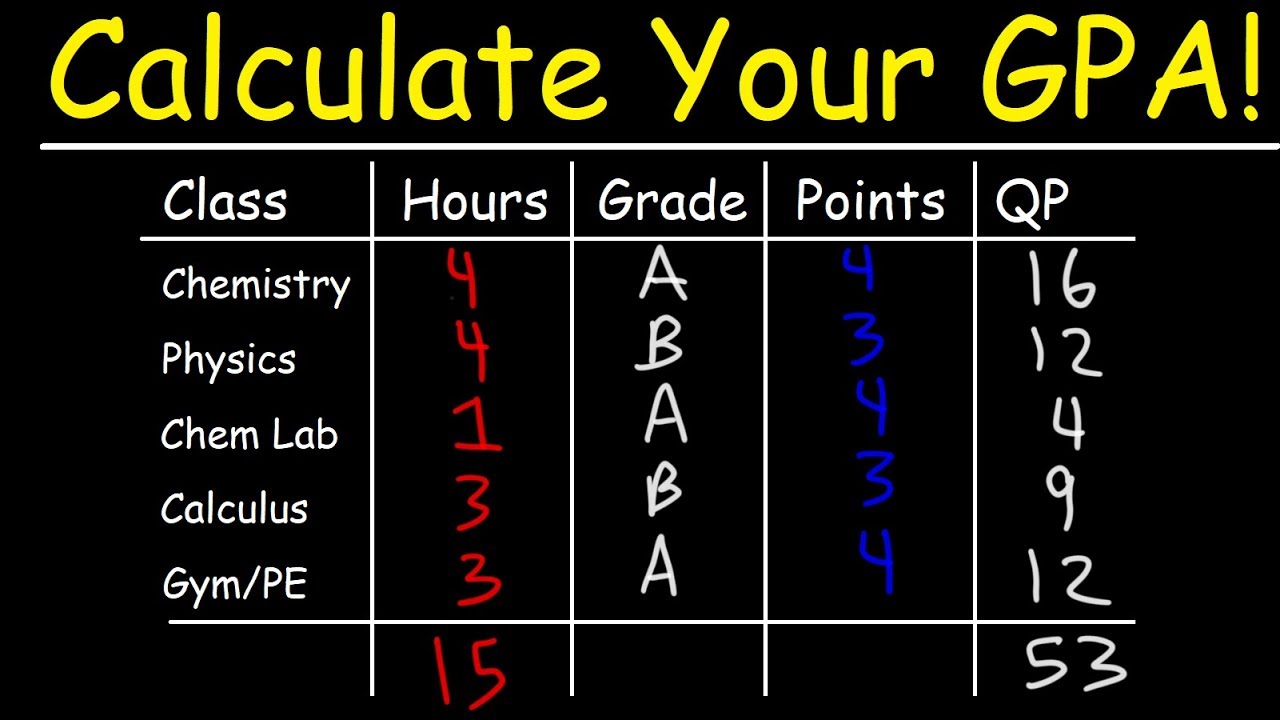
Cumulative GPA is a credit-weighted average of every grade earned across a student’s full academic record. The calculation multiplies each course’s grade point value by the number of credits it carries, sums those products, and divides by the total credits completed. A three-credit A (4.0) contributes twelve quality points; a four-credit B (3.0) contributes twelve as well. Both courses together produce a GPA of 3.43 across seven credits.
The credit weighting means that high-credit courses matter disproportionately. A poor grade in a five-credit course does more damage to a cumulative GPA than a poor grade in a two-credit elective, and a strong grade in a five-credit core course produces more benefit than the same grade in a lighter course. Students who understand this weighting make smarter decisions about where to concentrate their effort each semester.
The other critical property of cumulative GPA is its resistance to change as credits accumulate. Early in a programme, a strong semester can move the cumulative average significantly. Late in a programme, even a perfect semester has limited impact because new grades are averaged against a much larger base. A student with sixty credits at a 2.8 GPA who wants to reach 3.0 by graduation needs to average approximately 3.4 across the remaining thirty credits — a calculation that is not obvious without running the numbers. A overall grade point average estimator makes this forward projection straightforward, showing exactly what average is needed in remaining credits to reach any target GPA.
The Calculation Challenge for Educators
Teachers face a different set of calculation problems. Final grade formulas typically involve multiple weighted components — homework, quizzes, a midterm, a final exam — each carrying a specific percentage of the overall grade. A formula that allocates thirty percent to homework, twenty percent to the midterm, fifteen percent to quizzes, and thirty-five percent to the final exam requires multiplying each student’s score in each category by its weight, summing those products, and verifying the weights add to one hundred percent. One transposition error in a weight applies an incorrect formula to every student in the class.
Grade curves introduce additional complexity. Scaling grades to a target class mean, adding fixed points to every score, or applying a square-root curve all need to be applied consistently across the full class record. Manual application across thirty or more students creates more opportunity for inconsistency than the calculation itself warrants. For educators managing multiple classes with different grading structures, the arithmetic overhead compounds quickly.
Dedicated classroom grade computation tools handle the full range of educator calculations — weighted final grades, class averages, grade distributions, and curve applications — at class scale without the manual arithmetic that creates error risk. The time saved on calculation is time available for the instructional decisions those calculations inform.
Where Both Groups Go Wrong
Students most commonly miscalculate the impact of a single grade on their cumulative average — either overestimating how much one strong grade will help or underestimating how much a poor grade will hurt. The credit weighting and the accumulated base of prior grades both affect this calculation in ways that are not intuitive, and most students discover the reality only after the grade is posted rather than before a decision was made about how much effort a specific course deserved.
Educators most commonly make errors in grade weighting — assigning percentages that do not sum to one hundred, applying different weights to different students’ records by mistake, or calculating weighted averages incorrectly when component scores are on different scales. A quiz scored out of fifty and a homework set scored out of one hundred need to be normalised before weighting; treating the raw scores as equivalent produces incorrect weighted averages that systematically favour one component over another.
Both types of error share a common cause: performing arithmetic manually when the volume and complexity of the calculation exceed what manual processing handles reliably. The solution is not more careful arithmetic — it is delegating the arithmetic to tools designed for it and reserving human attention for the interpretation and decisions the numbers support.
Planning With Numbers Rather Than After Them
The most useful shift in how students relate to GPA is moving from reactive to proactive engagement. Knowing your cumulative GPA before a semester starts — and knowing what average you need across upcoming courses to reach a target — turns an abstract number into a concrete planning tool. It changes course selection from a question of interest alone to a question of interest and strategic GPA impact. It makes the connection between individual course performance and cumulative standing explicit rather than discovered retrospectively.
For teachers, the equivalent shift is calculating grade distributions midway through a term rather than only at its end. Knowing how grades are distributing across a class while assessments are still being returned allows for adjustments in pacing, review coverage, and grading calibration before the final calculation locks in results that cannot be changed.
For students and educators who want access to a broader set of academic and productivity tools alongside GPA and grading calculators, techyhittools.org provides a collection of online utilities covering multiple practical calculation categories. The academic tools sit within a broader ecosystem useful for the organisational side of student and educator life alike.
Academic numbers are not outputs to be received passively. They are targets to be tracked, projected, and understood in terms of what they require going forward. The calculations that make that understanding possible are not complex — but they are precise enough that getting them right consistently requires tools rather than mental arithmetic. Both are available. Using them is the smaller investment by far.
